Your shopping cart is empty!

Explore our collection of articles on hormones, thyroid health, and wellbeing—written with care and backed by research.

When we experience excessive stress—whether from internal worry or external circumstances—a bodily reaction is triggered, called the "fight or flight" response.


It is common knowledge that acne is caused by oily skin but few people know what causes that shine on your face and especially the T-zone. The oil is due to high levels of a hormone named androgen. However, since a normal secretion of androgen gives healthy skin, it cannot be completely done away with either.
The hormones are most actively produced during puberty, hence the oily skin and acne. Now the question that arises is how to balance one's hormones to help with acne.

The female body requires an optimal balance of progesterone and the estrogen hormones (a trio of related hormones called estradiol, estrone, and estriol). Progesterone deficiency occurs when the hormonal balance is shifted in favor of the estrogens. This condition is also referred to as "estrogen dominance."

 The thyroid gland helps set the rate of metabolism, which is the rate at which the body uses energy.

Doctor Richard Shames, MD & Acupuncturist Georjana Shames, LAc, Dipl. OM
As a doctor known for treating difficult thyroid conditions, a colleague recently inquired of me, "Dr. Shames, why have an acupuncturist as part of your practice? What can she offer thyroid patients that you—that we—cannot?" The short answer is "Plenty!" But here is what I actually told him.

There is evidence available that links the two together. Those that are tired and depressed may find that their thyroid is actually behind the problem.


By Richard Shames, M.D. & Karilee Shames, Ph.D., R.N.
In recent weeks, it has come to my attention that a great many women are still confused about the interactions between their thyroid hormone and their female hormone balance. The good news is that the estrogen panacea is winding down. The bad news is that a great many women don't know how to proceed with female hormone balance.
The more progressive gynecologists are using bioidentical hormones instead of Premarin & Provera. Nevertheless, estriol and micronized progesterone may still not be yielding the results you would like, unless potential thyroid situations are taken into account. This can be difficult if your gynecologist—like many—is still not using the new TSH guidelines (remember that a TSH level over 2.0 is suspicious for low thyroid, and above 3.0 is diagnostic for it).
When we first wrote our book THYROID POWER, we took the position (for simplicity) that an additional thyroid balance would be available by adjusting female hormones, if needed, and then adjusting adrenal hormones, if needed. The reverse of this posture is also quite valid. Further adjustments of the thyroid (whether you are being treated for a diagnosed thyroid problem or not) can be of great benefit in your reproductive hormone balance. The interaction between these two hormonal systems is extremely significant. Anyone who has taken birth control pills, or estrogen, needs to keep in mind that one additional effect of that maneuver is to increase thyroid-binding proteins in the blood.
This means that almost any thyroid blood test result is quite suspect, because the regular tests will show plenty of thyroid hormone in the bloodstream, but you may still not have sufficient thyroid hormone in the tissues. In other words, estrogens will make thyroid blood tests even more unreliable than they already are.
What this means is that you can be told you don't have a thyroid problem when you really do. In addition, if you are taking thyroid medicine, you could be told that you're taking plenty when, in reality, your tissue levels (not measured on blood tests) need more.
This is not a minor subtlety. It is of critical importance to you. A lack of proper thyroid hormone levels has been implicated in everything from bad PMS to irregular cycles, low libido, infertility, miscarriage, endometriosis, polycystic ovary, uterine fibroids, dysfunctional bleeding, severe menopause, and osteoporosis. With a long list of possible gynecological problems such as this, you are well advised to optimize your thyroid function as much as possible.
So once again I return to a recurrent theme in my office & coaching practice: if there has been any thyroid, diabetes, migraine, colitis, rheumatoid, or other autoimmune problem in your family, then you are likely to have some degree of thyroid involvement yourself. This is especially true approaching and during the menopause years. The Journal of Epidemiology in 2001 had a compelling article revealing that as much as 26% of menopausal women were hypothyroid, making their menopause years worse.
Therefore, you owe it to yourself to take extra diagnostic measures for revealing low thyroid, such as obtaining thyroid antibody testing in addition to the routine T3, T4, and TSH. In addition, make sure the T4 determination is the free T4, and your T3 testing is for both free T3 and total T3. Consider asking for a clinical trial of thyroid medicine if you are in the low normal area on these results. Perhaps even more important is for the person who is already diagnosed and being treated for low thyroid to make sure that their treatment protocol is optimal.
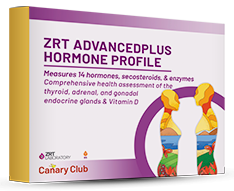
This innovative combination is recommended by Dr. Richard Shames, MD, who is a specialist in endocrinology hormones. Dr. Richard Shames practices as a consulting physician and personal health coach, focusing on thyroid and adrenal disorders and their many related conditions, and offers a more cost-effective assessment of the major hormones produced by the thyroid, adrenal, and gonad glands, along with an evaluation of vitamin D levels. This consolidated approach streamlines the testing process, offering greater value.
In my coaching practice, where I speak with women from all over the country, I frequently find someone who is experiencing uncomfortable symptoms of female hormone imbalance due to an inadequate dose of thyroid medicine. Often these symptoms completely disappear without further female hormone intervention, simply through proper thyroid care alone.
Keep in mind there are at least five (5) different kinds of synthetic thyroid and five (5) different kinds of natural thyroid, in addition to Armour. Sometimes it's not just the dose of your medicine; it's the type or brand—and don't forget that many women need a mix of thyroids rather than just one type.
