

Stress, Sleep and Neurotransmitters Are Part of the Same Bigger Picture
When we think about stress, we often think about cortisol. When we think about sleep, we often think about melatonin. When we think about mood, focus, motivation or calm, let's begin to think about neurotransmitters.
Hormones, sleep-wake rhythms and neurotransmitter-related pathways interact within a much larger biochemical network inside the body.
Why Combine the Two?
The CC NT + Hormone Profile was designed around a straightforward question: What can we learn when we look at the hormone environment and neurotransmitter-related patterns at the same time?
Hormone testing provides one part of the picture. Stress and sleep rhythm testing can add information about timing. Neurotransmitter-related testing adds information about a broader group of biochemical pathways and metabolites.
Together, they provide a more complete picture for discussion with a knowledgeable healthcare professional.
Think of It as a Lifestyle Cascade
A simple way to picture the body is as a constantly changing cascade:
Lifestyle + Sleep + Stress + Nutrition + Supplements + Medications + Endocrine Activity
One Test Does Not Explain Everything
No one laboratory profile can identify every reason for stress, poor sleep, mood changes, fatigue or difficulty concentrating. Urinary neurotransmitter-related measurements also should not be interpreted as a direct measurement of neurotransmitter concentrations inside the brain.
The value of this profile is therefore not that it promises a single answer. Its value is that it brings several related sets of measurements together so that lifestyle patterns can be considered together instead of separately.
CC NT + Hormone Profile
CC NT + Hormone Profile measures (in saliva + dried urine): Estradiol (E2), Estriol (E3), Estrone (E1), Progesterone (Pg), Testosterone (T), DHEA-S, and Cortisol; plus GABA, Glutamate, Glycine, Dopamine, Epinephrine, Norepinephrine, Histamine, Serotonin, Phenethylamine, related metabolites, amino acids, and pathway compounds, with creatinine as an adjunct urine marker.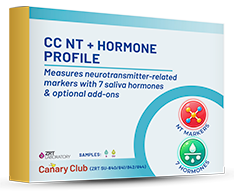
Combines the hormone picture with neurotransmitter-related markers to provide additional context when reviewing stress, sleep, energy, mood, and focus patterns. Profile choices can add 4-point saliva cortisol or timed dried-urine cortisol, cortisone, melatonin-related, and repeated stress-response measurements.
Additional Resources:
Crisis to Calm: The Remarkable Role of Your Neurotransmitters in Managing Stress
Our Emotions Reflect Our Neurotransmitter Hormone Balance
Understanding Your Unique Brain Chemistry: Neurodivergence and Neurotransmitters
Your Hormone Management Testing Plan
- Step 1: Start by selecting and ordering your desired test(s). You will receive an at-home testing kit that fits your unique concerns and needs. No prescription or visit to the doctor’s office is required. Your test kit is delivered directly to your front door.
- Step 2: Take the test to establish the starting hormone baseline at the beginning of your plan. Consider developing your plan alongside:
- a licensed health care provider for medical conditions, especially for severe "out of normal range" results
- or a Health Care Coach for nutrition and supplements that will support your desired results
- Step 3: Develop a plan based on your hormone test results, establishing a one-year or more outlook.
- Keep logs of your intakes, and daily routines related to your hormone test results.
- Keep logs of your intakes, and daily routines related to your hormone test results.
- Step 4: After 6-12 months of actively working on your plan, take the same test again to determine your progress.