

Behind Every Man is a Hormone

Hormonal Shifts in Men: A Lifelong Journey
Men experience hormonal shifts roughly every 7–10 years. These changes—subtle or intense—can affect any man, from youthful sons to grandfathers. Understanding these cycles gives families the tools to weather these transitions, reduce emotional chaos, and support each other with empathy rather than confusion.
The key is awareness. Without it, men may suffer needlessly—enduring depression, disconnection, or a crisis of identity. But with awareness and support, these natural life stages can become powerful turning points rather than painful disruptions.
Agony of Male Hormonal Cycles
Many boys and men struggle to transition smoothly through their life stages. This inner conflict, while biologically natural, is often invisible and isolating. Families can mistake these changes for personality flaws rather than stages of development.
These stages—puberty, early nesting, peak production, and midlife (50+)—are each marked by mental, emotional, and hormonal shifts. With the right support, a man can emerge from each stage stronger and more capable. Without support, the same transitions can lead to loneliness, confusion, or depression.
Puberty: More Than a Cracking Voice
Puberty is a critical developmental window—especially in forming emotional intelligence and the ability for adult intimacy. Yet, many boys receive little emotional support. They're taught to suppress feelings and focus on grades, sports, or status.
Yes, we notice their voices cracking, but do we realize it mirrors an inner world that is also under pressure—cracking in ways we can’t see?
In today’s fast-paced society, boys face not only hormonal chaos but also environmental and social stressors—junk food, overstimulation, and emotional neglect. Rather than jumping to diagnoses like ADHD or depression, we must ask: Are we honoring the natural, messy, hormonal reality of growing up?
Early Nesters: Redefining Masculinity in Young Men
Contrary to popular belief, many men between 16 and 26 experience a biological urge to nest—to find a partner, build a home, and start a family. Protect, provide, and preside.
Pop culture often suppresses this truth, pushing narratives of independence and detachment. Social media, video games, and other emerging technologies often redirect this natural expression towards isolating behaviors.
When allowed to develop without the noise of addictive distractions, nature delivers on their dreams, longings, and emotional fulfillment. These men may not speak of it, but they feel something pushing and pulling on them. Acknowledging these hormonally driven feelings can bring clarity and healing—for both the men and the people who love them.
"Men Alive" writer Jed Diamond, PhD, LCSW, says, “Men have hormonal cycles too. They’re just not acknowledged.”
The Peak Production Years: At What Cost?
From ages 27 to 42, men often devote their energy to productivity—careers, achievements, and ambition. These are considered their “prime” years. But where do they find the energy for family, health, or friendships?
Often, they don’t. They borrow from their bodies—sacrificing sleep, nutrition, relationships, and wellness. Hormonal imbalances like high cortisol or declining testosterone are common but ignored. This is a critical time for proactive health testing.
Midlife and the Crisis of Identity
Around age 45–50, many men hit a wall. Often labeled a “midlife crisis,” this period can feel like an unraveling—career dissatisfaction, relationship doubts, or emotional numbness. But beneath the surface, it’s often hormonal.
Testing for low testosterone or imbalanced neurotransmitters can reveal hidden causes behind irritability, fatigue, or depression. Instead of a sports car or an affair, what many men truly need is insight—and medical support.

The Cultural Silence Around Male Emotions
In her groundbreaking book, Gail Sheehy says, "Unlike women, most men don't recognize—or refuse to accept—that they continue to go through different stages throughout their adult lives."
And when those stages bring emotional stress? Many men retreat. Stonewalling, silence, or avoidance are often biological defenses. As psychologist John Gottman explains, women are wired to engage emotionally; men, to protect themselves from emotional flooding. “Most men don't recognize—or refuse to accept—that they continue to go through different stages throughout their adult lives.” But understanding this difference is the first step toward healing the communication gap between genders.
Men notoriously don't like to ask for directions, discuss their problems, read books about their health, or stop to re-examine where they have been in the journey of their lives. Sheehy claims that men are more stressed by emotion than women and even flooded by dangerous chemicals so that they have to stonewall or withdraw from intimate discussion as an innate defense mechanism.
Final Thoughts: Acceptance Is the First Step
Whether you acknowledge them or not, hormonal cycles will happen. You can’t slow them down or speed them up. But you can greet them with awareness and grace.
Knowing this truth, we can better support the boys and men in our lives—at every stage. Hormones are not a weakness. They're a part of our human story.
Let’s tell it more truthfully, more compassionately, and with open eyes.
Your Hormone Management Testing Plan
- Step 1: Start by selecting and ordering your desired test(s). You will receive an at-home testing kit that fits your unique concerns and needs. No prescription or visit to the doctor’s office is required. Your test kit is delivered directly to your front door.
- Step 2: Take the test to establish the starting hormone baseline at the beginning of your plan. Consider developing your plan alongside:
- a licensed health care provider for medical conditions, especially for severe "out of normal range" results
- or a Health Care Coach for nutrition and supplements that will support your desired results
- Step 3: Develop a plan based on your hormone test results, establishing a one-year or more outlook.
- Keep logs of your intakes, and daily routines related to your hormone test results.
- Keep logs of your intakes, and daily routines related to your hormone test results.
- Step 4: After 6-12 months of actively working on your plan, take the same test again to determine your progress.
Men's Vitality Hormone Profile Suite
Maximize the benefits of your fitness and health regimen. Tracking your hormone levels prevents ineffective strategies, unnecessary supplements, and disappointing results.
We’ve formulated three CLIA-certified hormone test profiles designed to provide progressively deeper insights into male hormonal health:
- Men’s Vitality Core Profile: 8 tests, a foundational assessment of key hormones that regulate testosterone balance, metabolism, and recovery
- Men’s Vitality I Profile: 12 tests, builds on Vitality Core Profile by expanding insights into Thyroid Metabolism assessment
- Men’s Vitality II Profile: 13 tests, builds on Vitality Core Profile by assessing precursors, excitatory, and inhibitory hormones affecting the production and efficacy of testosterone. Optional Add-on: 4 tests for Thyroid Metabolism assessment
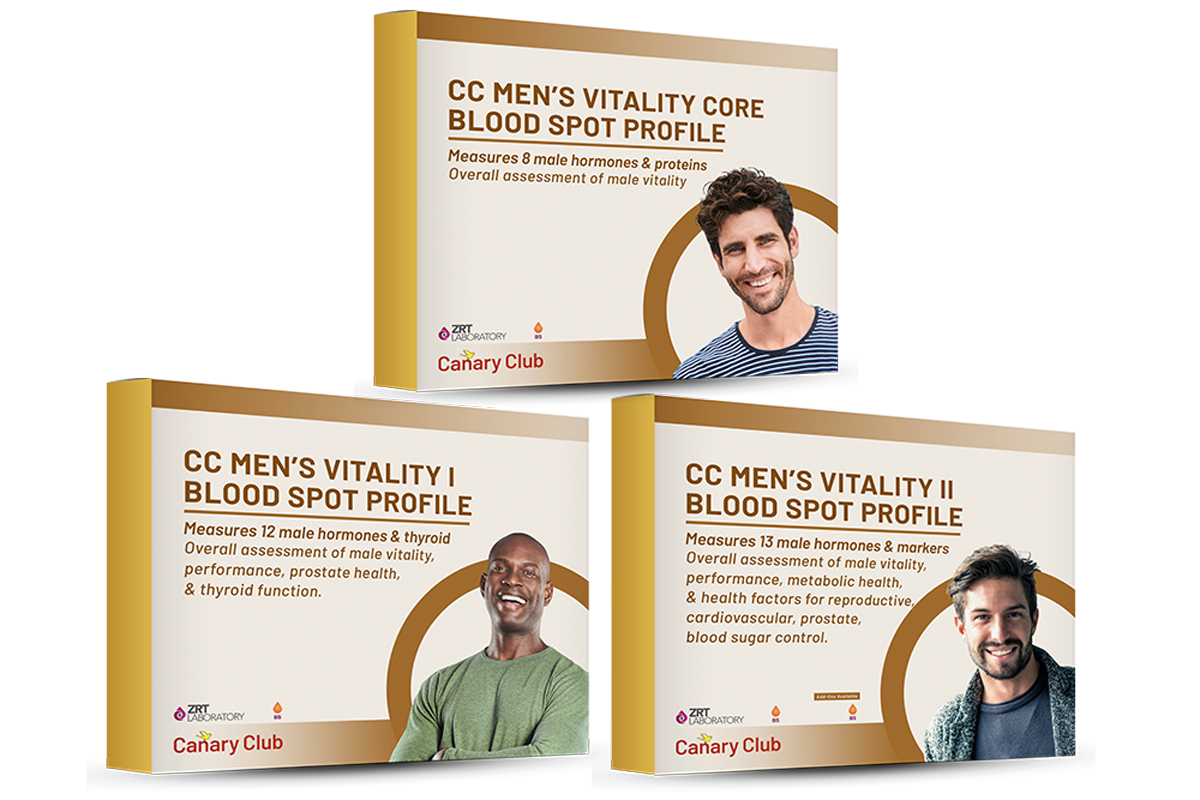
Profile Key Differences
| Hormone or Metabolite Tested | Vitality Core | Vitality I | Vitality II |
|---|---|---|---|
| E1, E2, Pg, T, DS, C (LCMS) | ✅ | ✅ | ✅ |
| SHBG, PSA (LIA) | ✅ | ✅ | ✅ |
| Thyroid (TSH, FT3, FT4, TPOab) (LIA-EIA) | ❌ | ✅ | ✅(add-on) |
| LH, FSH (LIA) | ❌ | ❌ | ✅ |
| A1c, Insulin (ITA, EIA) | ❌ | ❌ | ✅ |
| hsCRP (EIA) | ❌ | ❌ | ✅ |
Choosing the Right Test for You:
Selecting the right hormone panel depends on your health goals and concerns. Here’s a simple guide to help you decide:
-
Men’s Vitality Core Profile (Blood Spot)
- Best for foundational insights into male hormone balance and prostate health.
- Ideal if you want to monitor testosterone levels, estrogen balance, stress hormones (cortisol & DHEA-S), and prostate health (PSA).
-
Men’s Vitality I Profile (Blood Spot)
- Includes everything in the Core Profile plus a full thyroid metabolism assessment.
- Best if you're experiencing fatigue, weight gain, or slow metabolism and want to assess thyroid function (TSH, Free T3, Free T4, and TPO antibodies).
-
Men’s Vitality II Profile (Blood Spot)
- Most comprehensive—assessing not just testosterone and thyroid (add-on) but also fertility markers, inflammation, and blood sugar regulation.
- Best for those concerned with testosterone production signals (LH & FSH), metabolic health (A1c, insulin), and inflammation (hsCRP).
Additional Resources:
- Unleashing Your Power: The Impact of Male Hormones
- Why Hormones Matter for Men at Any Age
- How Men's Hormones Make for Mood Spikes
- Estrogen is Essential
- Testosterone Controversy: Can Supplements Make You Young Again?
- Men and Hormones : Male Menopause
- Growth Hormone and Resistance Training
- Andropause Subtle Yet True
- His Advanced Plus