
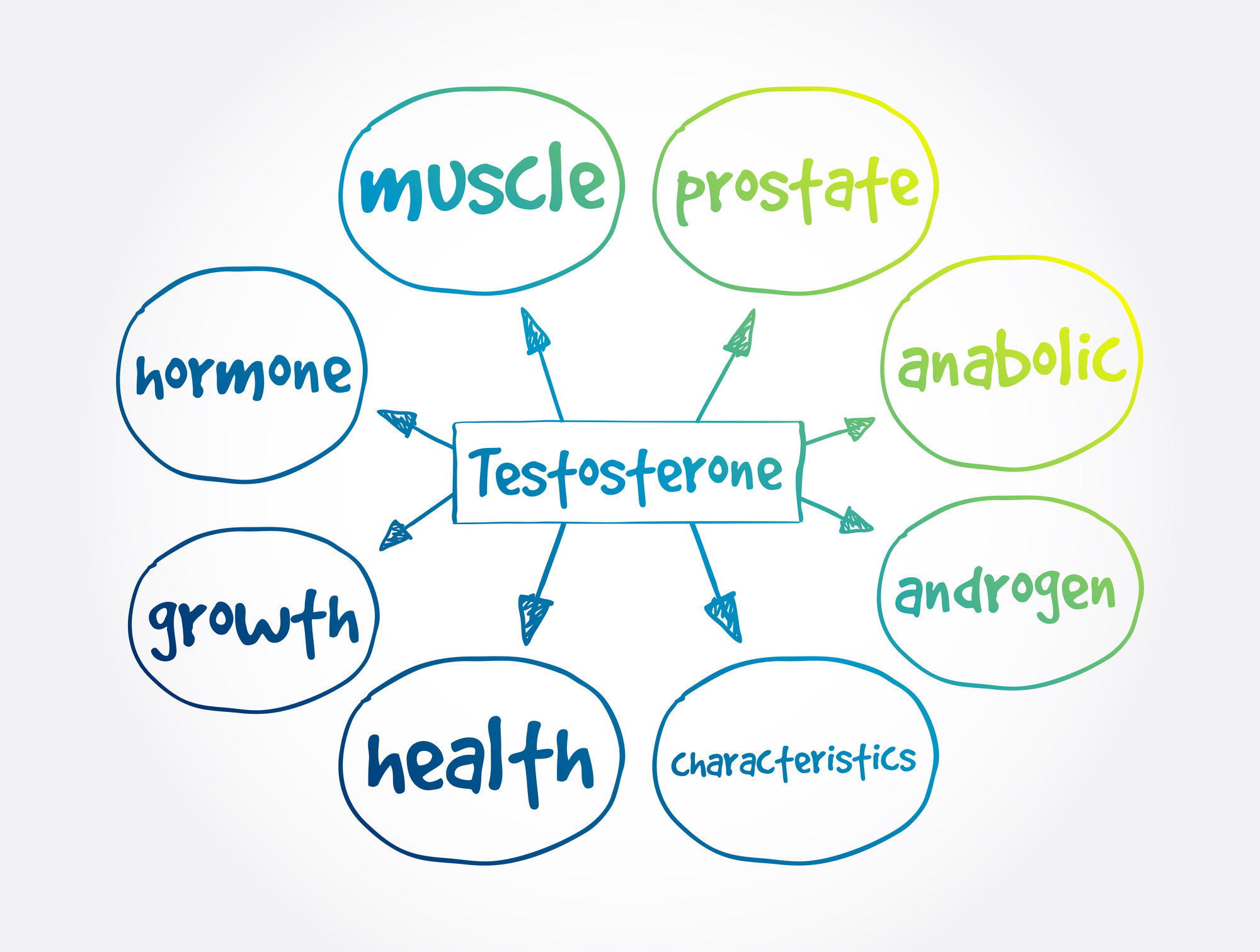
Does "Low Testosterone" Need to Be Treated?
Testosterone is often associated with strength and youth and has several important functions.

You have probably seen a commercial or advertisement for a dietary supplement that promises to remedy the effects of the natural decline of testosterone that occurs during a man’s life. Perhaps an older gentleman with slick, toned muscles flexes on the bottle or promotional packaging, beckoning to aging men who could use a boost in vitality. Before you buy, consider that research and evidence related to the effectiveness and safety of testosterone supplements are scant.
Testosterone is often associated with strength and youth and has several important functions. Testosterone contributes to muscle mass, bone density, an adequate supply of red blood cells, and the development of sex organs. Men begin to experience a slow, yet steady, decline in the production of testosterone around the age of 30.
Not all experts agree that decreasing testosterone needs to be treated; additionally, pinpointing testosterone levels as “low” or “normal” can be difficult. The Cleveland Clinic Foundation states that “the only accurate way to detect the condition is to have your doctor measure the amount of testosterone in your blood. It sometimes may take several measurements of testosterone to be sure if a patient has a deficiency since levels of testosterone tend to fluctuate throughout the day. The highest levels of testosterone are generally in the morning.”
Testosterone supplementation can shrink testicles
Low testosterone, or “Low T,” can certainly be a real problem for men. The issue with trying to correct low testosterone levels by adding extra testosterone is that the body can respond by shutting down its own testosterone-making machinery. That means the testicles shrink and soften, and if you stop taking the replacement therapy, your testosterone levels will drop even lower than they were before you started. It’s easy to get hooked, in other words.
The pituitary gland is located in the brain and works as a hormone thermostat. The pituitary constantly monitors testosterone levels in the blood, and when levels are low, it secretes a hormone called luteinizing hormone (LH). Once released, LH travels to the testicles and stimulates them to produce more testosterone. Testosterone levels decline with age because the pituitary ages and produces less LH. Your testicles also become less sensitive to LH as you age and therefore produce less testosterone. If testosterone is replaced all by itself, the pituitary thinks that the body has adequate levels and therefore stops producing LH. The result is that the testicles receive no signal to produce testosterone, and because they aren’t being stimulated, they begin to shrink.
Canary Club home testing kits can effectively measure your current hormone levels. If you do detect a deficiency in one or more hormones, like testosterone, you can work with a health care professional to successfully correct the imbalance.
Testosterone can be low for a number of reasons independent of aging. The following may cause testosterone deficiency:
- stress
- alcoholism
- chronic illness
- chronic renal failure
- cirrhosis of the liver
- hemochromatosis
- some medications
- AIDS
- genetic abnormalities
- inflammatory disease
- dysfunction of the pituitary gland
- chemotherapy or radiation treatment
- injury to or infection of the testicles
http://my.clevelandclinic.org/services/testosterone_replacement_therapy/hic_testosterone_replacement_therapy.aspx

The Risks of Testosterone Replacement Therapy
Although testosterone replacement therapy is sometimes viewed as the fountain of youth and can be legitimately utilized to correct certain conditions, men who are experiencing lower testosterone levels due to aging should carefully weigh the risks before beginning any type of treatment. For example, testosterone therapy may:
- limit sperm production
- cause testicle shrinkage
- enlarge breasts
- cause acne or other skin problems
- contribute to sleep apnea
- increase the risk of heart disease
- stimulate noncancerous growth of the prostate
There are ways to naturally increase testosterone production, such as shedding extra pounds if overweight, increasing vitamin D levels, getting plenty of sleep, avoiding constant stress, keeping low blood glucose levels, doing weight training and cardio exercise, taking zinc supplements, and eating healthy fats.
Your Hormone Management Testing Plan
- Step 1: Start by selecting and ordering your desired test(s). You will receive an at-home testing kit that fits your unique concerns and needs. No prescription or visit to the doctor’s office is required. Your test kit is delivered directly to your front door.
- Step 2: Take the test to establish the starting hormone baseline at the beginning of your plan. Consider developing your plan alongside:
- a licensed health care provider for medical conditions, especially for severe "out of normal range" results
- or a Health Care Coach for nutrition and supplements that will support your desired results
- Step 3: Develop a plan based on your hormone test results, establishing a one-year or more outlook.
- Keep logs of your intakes, and daily routines related to your hormone test results.
- Keep logs of your intakes, and daily routines related to your hormone test results.
- Step 4: After 6-12 months of actively working on your plan, take the same test again to determine your progress.
Men's Vitality Hormone Profile Suite
Maximize the benefits of your fitness and health regimen. Tracking your hormone levels prevents ineffective strategies, unnecessary supplements, and disappointing results.
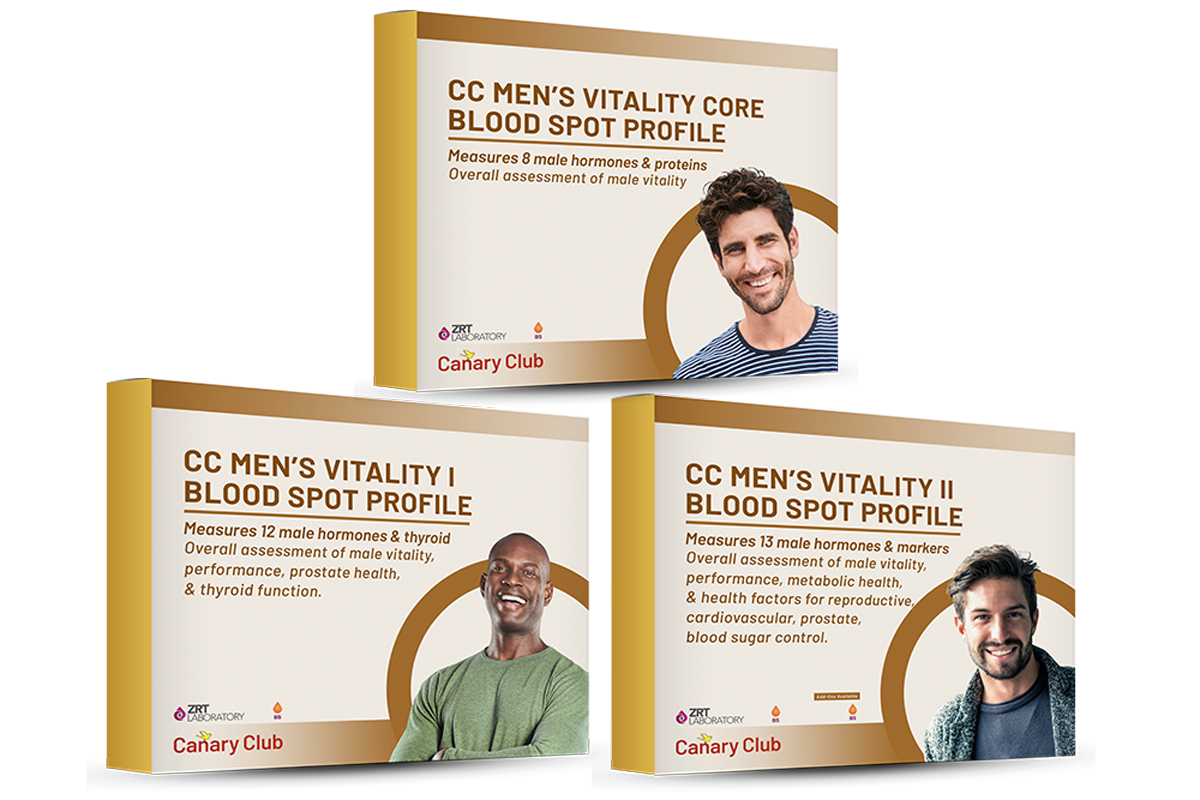
We’ve formulated three CLIA-certified hormone test profiles designed to provide progressively deeper insights into male hormonal health:
- Men’s Vitality Core Profile: 8 tests, a foundational assessment of key hormones that regulate testosterone balance, metabolism, and recovery
- Men’s Vitality I Profile: 12 tests, builds on Vitality Core Profile by expanding insights into Thyroid Metabolism assessment
- Men’s Vitality II Profile: 13 tests, builds on Vitality Core Profile by assessing precursors, excitatory, and inhibitory hormones affecting the production and efficacy of testosterone. Optional Add-on: 4 tests for Thyroid Metabolism assessment
Profile Key Differences
| Hormone or Metabolite Tested | Vitality Core | Vitality I | Vitality II |
|---|---|---|---|
| E1, E2, Pg, T, DS, C (LCMS) | ✅ | ✅ | ✅ |
| SHBG, PSA (LIA) | ✅ | ✅ | ✅ |
| Thyroid (TSH, FT3, FT4, TPOab) (LIA-EIA) | ❌ | ✅ | ✅(add-on) |
| LH, FSH (LIA) | ❌ | ❌ | ✅ |
| A1c, Insulin (ITA, EIA) | ❌ | ❌ | ✅ |
| hsCRP (EIA) | ❌ | ❌ | ✅ |
Choosing the Right Test for You:
Selecting the right hormone panel depends on your health goals and concerns. Here’s a simple guide to help you decide:
-
Men’s Vitality Core Profile (Blood Spot)
- Best for foundational insights into male hormone balance and prostate health.
- Ideal if you want to monitor testosterone levels, estrogen balance, stress hormones (cortisol & DHEA-S), and prostate health (PSA).
-
Men’s Vitality I Profile (Blood Spot)
- Includes everything in the Core Profile plus a full thyroid metabolism assessment.
- Best if you're experiencing fatigue, weight gain, or slow metabolism and want to assess thyroid function (TSH, Free T3, Free T4, and TPO antibodies).
-
Men’s Vitality II Profile (Blood Spot)
- Most comprehensive—assessing not just testosterone and thyroid (add-on) but also fertility markers, inflammation, and blood sugar regulation.
- Best for those concerned with testosterone production signals (LH & FSH), metabolic health (A1c, insulin), and inflammation (hsCRP).
Additional Resources:
- Unleashing Your Power: The Impact of Male Hormones
- Why Hormones Matter for Men at Any Age
- How Men's Hormones Make for Mood Spikes
- Estrogen is Essential
- Testosterone Controversy: Can Supplements Make You Young Again?
- Men and Hormones : Male Menopause
- Growth Hormone and Resistance Training
- Andropause Subtle Yet True
- His Advanced Plus
http://my.clevelandclinic.org/services/testosterone_replacement_therapy/hic_testosterone_replacement_therapy.aspx
The Atlantic magazine:http://www.theatlantic.com/health/archive/2013/04/should-the-modern-man-be-taking-testosterone/274663/
http://www.ncbi.nlm.nih.gov/pubmed?cmd=search&database=pubmed&term=%22Sabanegh+ES%22[Author]
http://my.clevelandclinic.org/staff_directory/Staff_Display.aspx?DoctorID=7284
http://my.clevelandclinic.org/disorders/androgen_deficiency/urology_treatment.aspx
Jennifer Cebulak,
Research Editor