
As men reach the fourth decade of their lives, growth hormone (made by the pituitary gland) begins to decline.
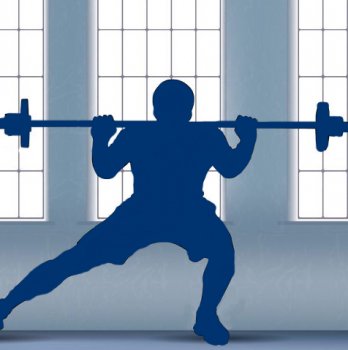
Although some men choose to accept the inevitability of the drop, others naturally increase their levels of growth hormone by upping the intensity of resistance training.
When lifting weights, men over the age of forty should pay extra attention to their joints, taking care to avoid excessive stress on knees, ankles, elbows, and wrists. The gradual aging process requires a subtle shift in the way that you treat your body, compensating for the natural effects of time. Use weight-lifting safety belts and braces; be sure to follow all safety rules listed on exercise equipment. Limit how often you "max out," meaning that you work your muscles to exhaustion (failure). In an article by Luis M. Alvidrez and Len Kravitz, Ph.D., of the University of New Mexico, it is noted that "always taking each set to failure can have negative effects on strength, power, and hormone responses (Izquierdo et al., 2006)."
If you enjoy cardio workouts more than weight training, you'll be glad to know that intense workouts can also promote the release of growth hormones. Running sprints increases the amount of time that the body burns fat—and it also increases the release of growth hormones.
Growth hormone is important because it impacts carbohydrate, lipid, and protein metabolism.
Carbohydrate metabolism: Growth hormone, along with other hormones, helps to maintain a normal range of blood glucose; growth hormone is sometimes known to have anti-insulin activity.
Lipid metabolism: growth hormone promotes the utilization of fat by stimulating oxidation in adipocytes and triglyceride breakdown.
Protein metabolism: growth hormone stimulates protein anabolism in some tissues, as evidenced by decreased oxidation of proteins, increased protein synthesis, and increased amino acid uptake
 Five Reasons to Test Hormone Levels
- check for reduced pituitary gland function
- identify growth deficiencies
- help diagnose hyperpituitarism
- help diagnose pituitary tumors
- evaluate hCG therapy
Men's Vitality Hormone Profile Suite
Maximize the benefits of your fitness and health regimen. Tracking your hormone levels prevents ineffective strategies, unnecessary supplements, and disappointing results.
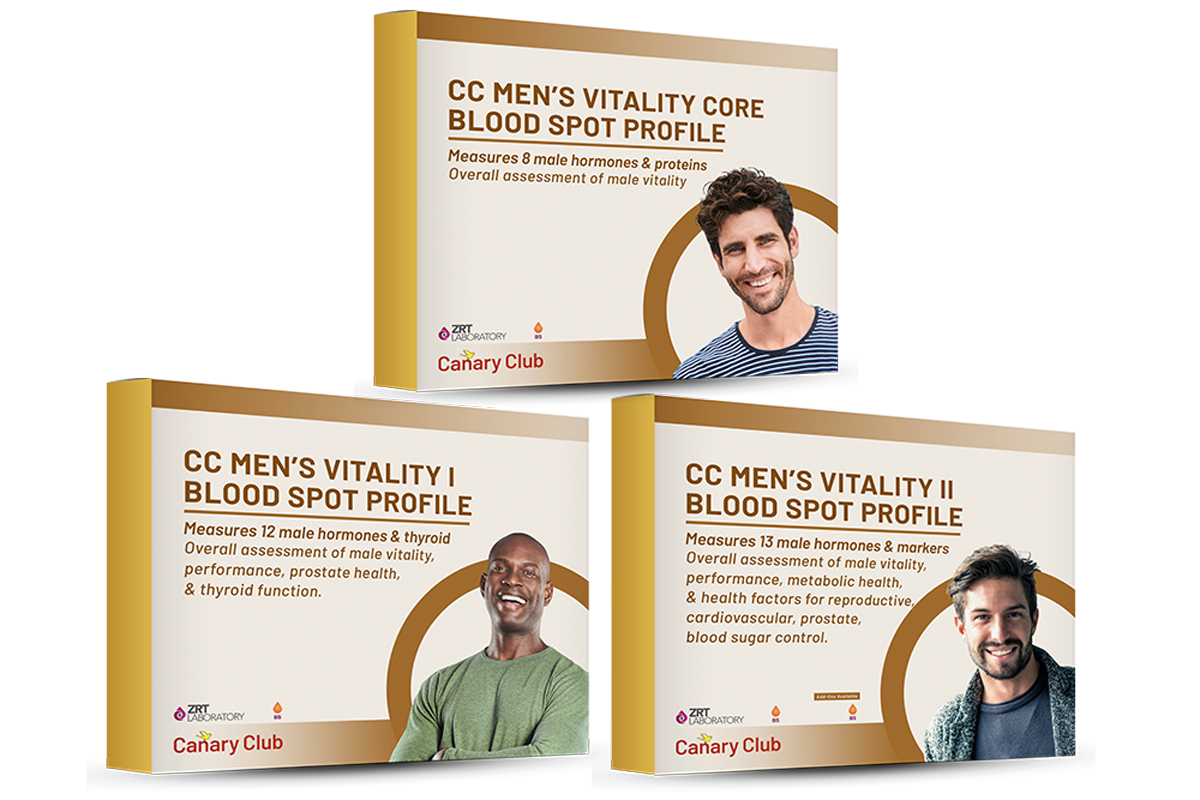
We’ve formulated three CLIA-certified hormone test profiles designed to provide progressively deeper insights into male hormonal health:
- Men’s Vitality Core Profile: 8 tests, a foundational assessment of key hormones that regulate testosterone balance, metabolism, and recovery
- Men’s Vitality I Profile: 12 tests, builds on Vitality Core Profile by expanding insights into Thyroid Metabolism assessment
- Men’s Vitality II Profile: 13 tests, builds on Vitality Core Profile by assessing precursors, excitatory, and inhibitory hormones affecting the production and efficacy of testosterone. Optional Add-on: 4 tests for Thyroid Metabolism assessment
Profile Key Differences
| Hormone or Metabolite Tested | Vitality Core | Vitality I | Vitality II |
|---|---|---|---|
| E1, E2, Pg, T, DS, C (LCMS) | ✅ | ✅ | ✅ |
| SHBG, PSA (LIA) | ✅ | ✅ | ✅ |
| Thyroid (TSH, FT3, FT4, TPOab) (LIA-EIA) | ❌ | ✅ | ✅(add-on) |
| LH, FSH (LIA) | ❌ | ❌ | ✅ |
| A1c, Insulin (ITA, EIA) | ❌ | ❌ | ✅ |
| hsCRP (EIA) | ❌ | ❌ | ✅ |
Choosing the Right Test for You:
Selecting the right hormone panel depends on your health goals and concerns. Here’s a simple guide to help you decide:
-
Men’s Vitality Core Profile (Blood Spot)
- Best for foundational insights into male hormone balance and prostate health.
- Ideal if you want to monitor testosterone levels, estrogen balance, stress hormones (cortisol & DHEA-S), and prostate health (PSA).
-
Men’s Vitality I Profile (Blood Spot)
- Includes everything in the Core Profile plus a full thyroid metabolism assessment.
- Best if you're experiencing fatigue, weight gain, or slow metabolism and want to assess thyroid function (TSH, Free T3, Free T4, and TPO antibodies).
-
Men’s Vitality II Profile (Blood Spot)
- Most comprehensive—assessing not just testosterone and thyroid (add-on) but also fertility markers, inflammation, and blood sugar regulation.
- Best for those concerned with testosterone production signals (LH & FSH), metabolic health (A1c, insulin), and inflammation (hsCRP).
Additional Resources:
- Unleashing Your Power: The Impact of Male Hormones
- Why Hormones Matter for Men at Any Age
- How Men's Hormones Make for Mood Spikes
- Estrogen is Essential
- Testosterone Controversy: Can Supplements Make You Young Again?
- Men and Hormones : Male Menopause
- Growth Hormone and Resistance Training
- Andropause Subtle Yet True
- His Advanced Plus
Research Editor: Jennifer Cebulak
References
http://www.webmd.com/a-to-z-guides/growth-hormone
http://fitnessexpose.com/training-strategies-to-increase-growth-hormone-levels/
http://www.unm.edu/~lkravitz/Article%20folder/hormoneResUNM.html
http://medical-dictionary.thefreedictionary.com/Growth+Hormone+Tests