

Three Years of Illness: Symptoms Subside Only to Return
Anderson was feeling really troubled—he kept getting sick.
Since 2022, he has been catching respiratory infections every six months with symptoms that lingered for close to a year. He wondered if this was an undetected existing condition that was being triggered, or perhaps a dietary imbalance, hormonal issue, or even an entirely unknown illness. He was frustrated because he couldn't find the answers he needed despite multiple visits to healthcare professionals.
What was even more worrisome was that his family had a history of health problems around the heart, diabetes, and weight. Anderson realized he needed to take a more direct role in advocating for his health, actively seeking solutions to his concerns rather than being passive about self-care.
Part 1: Anderson's decision to empower himself by taking at-home hormone health tests and working with a health coach to get answers.
Part 2 (coming): Anderson's progress as he works with a health coach to help address his ongoing symptoms.
Uncertainty About the Causes
At 33, Anderson enjoyed a fulfilling life until a respiratory infection in July 2022 altered everything. For the first time, he faced relentless symptoms for over 19 months. In November 2023, he encountered a milder second infection. After many doctor visits and several tests later, he still doesn’t have a clear understanding of what is going on, and he has not been provided any explanation.
He lives a lifestyle dedicated to sports and nutrition and is conscious of his decisions, and more than anything, he wants to continue to be vibrant as he ages.
This was the first time he experienced his body reacting so intensely to waves of illnesses. Beginning with three weeks of vertigo, he needed daily two-hour naps, affecting his work for five months. His limbs felt unusually heavy for six months, and the sensation of being "weighed down" persisted 19 months later. Severe tension headaches plagued him intensely for nine months, then sporadically every two months. Despite these persistent symptoms, tests in May 2023 revealed pre-diabetic HbA1c levels but no other issues.
Motivated into Action
Tired of waiting, Anderson realized the importance of self-advocacy, where health is a collaborative effort between people and their healthcare practitioners.
Anderson decided to try the Canary Club AdvancedPlus Hormone Profile and the ZRT Cardio-Metabolic Profile. His reasons for selecting these two tests were his family history and his ongoing chronic symptoms.
With just a few simple saliva and dried blood samples, Anderson sent off his tests. When the results came back, he enlisted the help of a health coach to interpret them. What followed was nothing short of eye-opening.
Tune in for Part II with the results and follow-up to be revealed.
Canary Club AdvancedPlus Profile
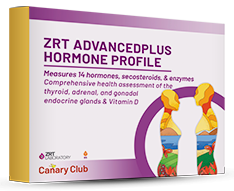
This innovative combination is recommended by Dr. Richard Shames, MD, who is a specialist in endocrinology hormones. Dr. Richard Shames practices as a consulting physician and personal health coach, focusing on thyroid and adrenal disorders and their many related conditions, and offers a more cost-effective assessment of the major hormones produced by the thyroid, adrenal, and gonad glands, along with an evaluation of vitamin D levels. This consolidated approach streamlines the testing process, offering greater value.
- Sex steroid hormones (in saliva): Estradiol (E2), Progesterone (Pg), and Testosterone (T)
- Adrenal Hormones (in saliva): DHEA-S (DS), Diurnal Cortisol (sampled 4x to show your full daily cortisol cycle)
- Thyroid hormones (in blood spot): TSH, fT3, fT4, TPOab
- Vitamin D (in blood spot): 25-OH, Total (D2, D3)
ZRT CardioMetabolic Profile
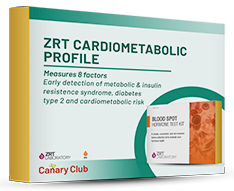 See our ZRT CardioMetabolic Profile for early detection of major indicators associated with metabolic/insulin resistance syndrome. Samples are taken from blood spot.
ZRT CardioMetabolic Profile measures (in blood spot):
Insulin, High Sensitivity C-Reactive Protein (hsCRP), Glycated Hemoglobin (hbA1C), Triglyceride (TG), Total Cholesterol (CH), High-density lipoprotein (HDL), low-density lipoprotein (LDL), Very-low-density lipoprotein (VLDL)
Allows early detection of major indicators associated with metabolic/insulin resistance syndrome. Used as a screening profile to reduce the overall risk of type 2 diabetes and Cardiovascular disease (CVD).
Your Hormone Management Testing Plan
- Step 1: Start by selecting and ordering your desired test(s). You will receive an at-home testing kit that fits your unique concerns and needs. No prescription or visit to the doctor’s office is required. Your test kit is delivered directly to your front door.
- Step 2: Take the test to establish the starting hormone baseline at the beginning of your plan. Consider developing your plan alongside:
- a licensed health care provider for medical conditions, especially for severe "out of normal range" results
- or a Health Care Coach for nutrition and supplements that will support your desired results
- Step 3: Develop a plan based on your hormone test results, establishing a one-year or more outlook.
- Keep logs of your intakes, and daily routines related to your hormone test results.
- Keep logs of your intakes, and daily routines related to your hormone test results.
- Step 4: After 6-12 months of actively working on your plan, take the same test again to determine your progress.
Looking for a Health Coach?
Have questions on interpreting the results of this test? If you aren’t already working with a practitioner, have a look at our Health Care Coaches page for additional information and resources.