
Men: Keep that youthful, vital, and virile feeling through midlife.
Men are not immune to midlife changes. They too experience the so-called change of life as a result of declining hormones, specifically low testosterone, which is commonly seen beginning in the fourth decade of life. This is often associated with symptoms of aging in males referred to as "andropause," named after the androgens, the medical name for male hormones. This is the counterpart to menopause in women when ovarian production of estrogens and progesterone begins to decline. But for men, it is a more gradual process than the rollercoaster many women experience during menopause.
 Andropausal men may first notice a subtle loss of libido, along with a downward shift in strength and energy. Depression, burnout, the feeling of being tired but wired, and a persistent lack of stamina are also common symptoms as the predominant male hormones, testosterone and DHEA, decline with age. These are important anabolic hormones in men because they maintain both physical and mental health. For example, they increase energy and decrease fatigue. They help maintain erectile function and normal sex drive and, very significantly, increase the strength of all structural tissues: the skin, the bones, and the muscles, including the heart.
Proper androgen levels also help prevent depression and mental fatigue. Needless to say, a deficiency of these hormones will most likely have a significant impact on both physical and mental male health. Stress management, exercise, proper nutrition, hormone testing, and androgen replacement therapy with physician guidance can be beneficial to counter andropause symptoms.
If you are experiencing andropausal symptoms, our at-home testing can identify and monitor for estrogen dominance, hypogonadism, fatigue, low libido, erectile dysfunction (ED), infertility, osteoporosis screening, and adrenal dysfunction, as well as prostate-specific antigen (PSA) and thyroid. Saliva and dried blood spot testing are convenient, inexpensive, and, above all, accurate means of testing steroid hormones. Vitality has nothing to do with age!
Men's Vitality Hormone Profile Suite
Maximize the benefits of your fitness and health regimen. Tracking your hormone levels prevents ineffective strategies, unnecessary supplements, and disappointing results.
We’ve formulated three CLIA-certified hormone test profiles designed to provide progressively deeper insights into male hormonal health:
- Men’s Vitality Core Profile: 8 tests, a foundational assessment of key hormones that regulate testosterone balance, metabolism, and recovery
- Men’s Vitality I Profile: 12 tests, builds on Vitality Core Profile by expanding insights into Thyroid Metabolism assessment
- Men’s Vitality II Profile: 13 tests, builds on Vitality Core Profile by assessing precursors, excitatory, and inhibitory hormones affecting the production and efficacy of testosterone. Optional Add-on: 4 tests for Thyroid Metabolism assessment
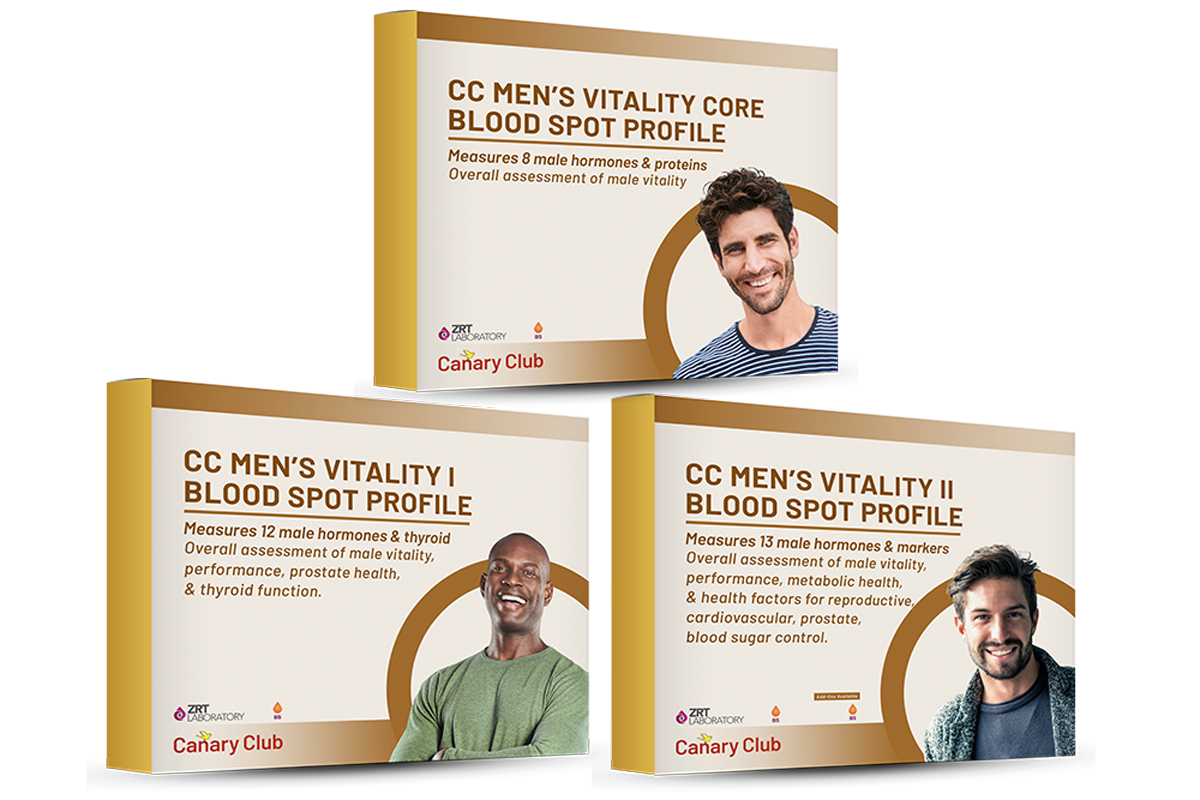
Profile Key Differences
| Hormone or Metabolite Tested | Vitality Core | Vitality I | Vitality II |
|---|---|---|---|
| E1, E2, Pg, T, DS, C (LCMS) | ✅ | ✅ | ✅ |
| SHBG, PSA (LIA) | ✅ | ✅ | ✅ |
| Thyroid (TSH, FT3, FT4, TPOab) (LIA-EIA) | ❌ | ✅ | ✅(add-on) |
| LH, FSH (LIA) | ❌ | ❌ | ✅ |
| A1c, Insulin (ITA, EIA) | ❌ | ❌ | ✅ |
| hsCRP (EIA) | ❌ | ❌ | ✅ |
Choosing the Right Test for You:
Selecting the right hormone panel depends on your health goals and concerns. Here’s a simple guide to help you decide:
-
Men’s Vitality Core Profile (Blood Spot)
- Best for foundational insights into male hormone balance and prostate health.
- Ideal if you want to monitor testosterone levels, estrogen balance, stress hormones (cortisol & DHEA-S), and prostate health (PSA).
-
Men’s Vitality I Profile (Blood Spot)
- Includes everything in the Core Profile plus a full thyroid metabolism assessment.
- Best if you're experiencing fatigue, weight gain, or slow metabolism and want to assess thyroid function (TSH, Free T3, Free T4, and TPO antibodies).
-
Men’s Vitality II Profile (Blood Spot)
- Most comprehensive—assessing not just testosterone and thyroid (add-on) but also fertility markers, inflammation, and blood sugar regulation.
- Best for those concerned with testosterone production signals (LH & FSH), metabolic health (A1c, insulin), and inflammation (hsCRP).
Additional Resources:
- Unleashing Your Power: The Impact of Male Hormones
- Why Hormones Matter for Men at Any Age
- How Men's Hormones Make for Mood Spikes
- Estrogen is Essential
- Testosterone Controversy: Can Supplements Make You Young Again?
- Men and Hormones : Male Menopause
- Growth Hormone and Resistance Training
- Andropause Subtle Yet True
- His Advanced Plus
Your Hormone Management Testing Plan
- Step 1: Start by selecting and ordering your desired test(s). You will receive an at-home testing kit that fits your unique concerns and needs. No prescription or visit to the doctor’s office is required. Your test kit is delivered directly to your front door.
- Step 2: Take the test to establish the starting hormone baseline at the beginning of your plan. Consider developing your plan alongside:
- a licensed health care provider for medical conditions, especially for severe "out of normal range" results
- or a Health Care Coach for nutrition and supplements that will support your desired results
- Step 3: Develop a plan based on your hormone test results, establishing a one-year or more outlook.
- Keep logs of your intakes, and daily routines related to your hormone test results.
- Keep logs of your intakes, and daily routines related to your hormone test results.
- Step 4: After 6-12 months of actively working on your plan, take the same test again to determine your progress.